
The ways of the desert dwellers
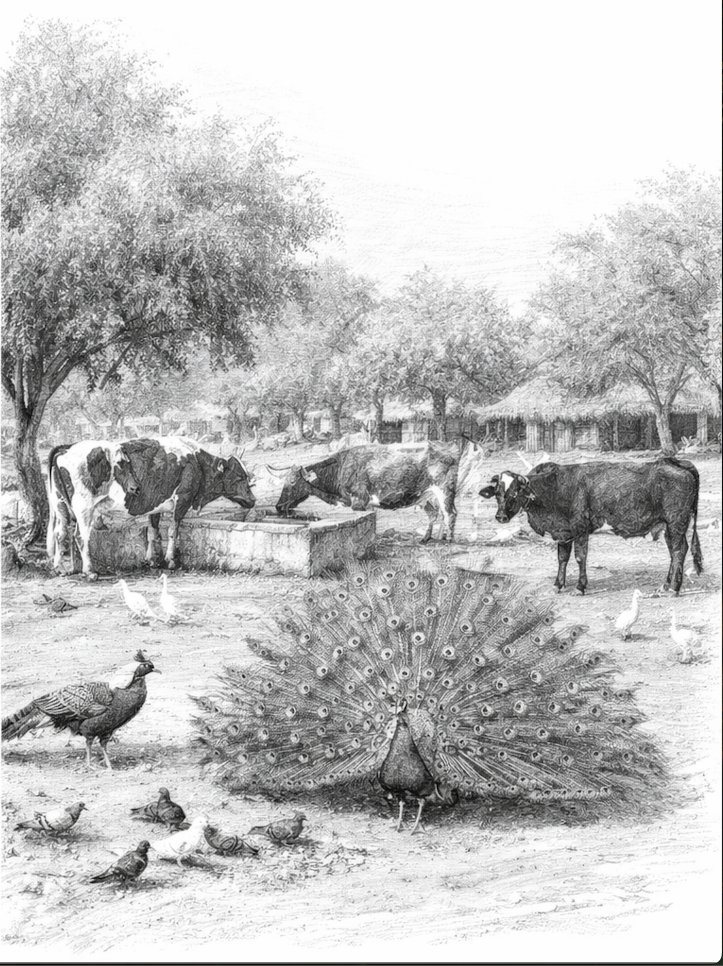
“Umar has brought Marvi
Whose heart is attached to her hut.
Marvi Sings:
I remember the Golada fruits,
and the green pastures of my land
The sighs from within my heart
strike against these palace walls!
Umar, such are the ways
of my dear people, I love them
They first offer water to cattles and strangers,
Before drinking themselves!
Umar, my soul keeps screaming
Crying and calling my people!”
- Shah-Jo-Risalo by Shah Abdul Latif
The civilization that rose on the banks of the river Sindhu (Indus) is home to one of the oldest in the world, the Indus Valley Civilization. Mystic poetry and folk songs are as old for the Sindhi people as the flow of the great river, and the poetry of Shah Abdul Latif is the quintessential expression of Sindhi poetry. The story of Marvi, her longing for her land and her people, as captured in the above poem may be regarded as a popular folktale amongst the many that are sung across the land even today. However, the desert dunes that Marvi sang about is the home of my ancestors, the Thari people, and the poem describes a verbatim description of how our people lived, and continue to live. This is the story of Aangan.
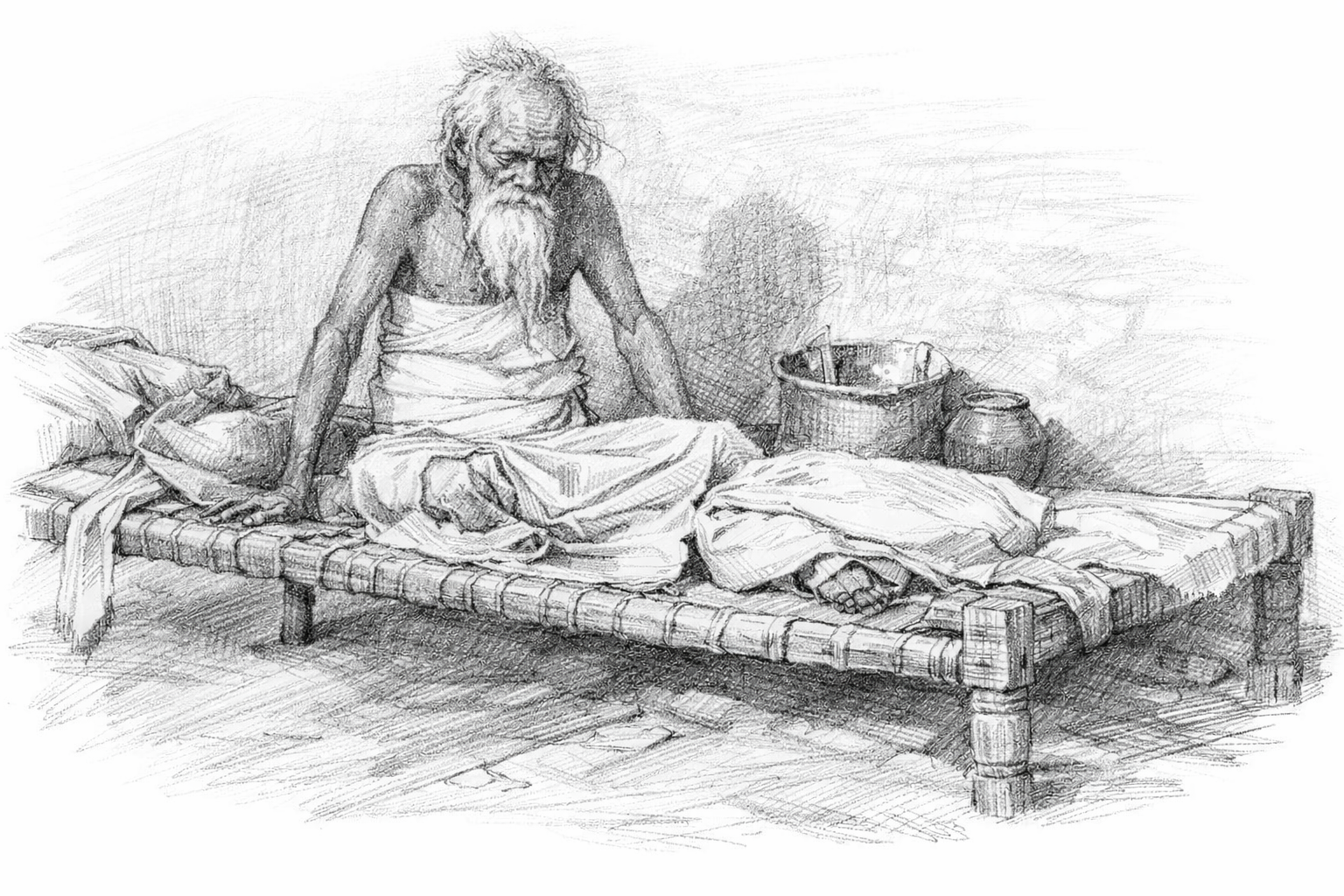
“Go on planting the seeds of beauty in this world, a field of flowers infinitely larger than your imagination will sprout in your heart”
— Sant Nenuram, caretaker of the people of Thar
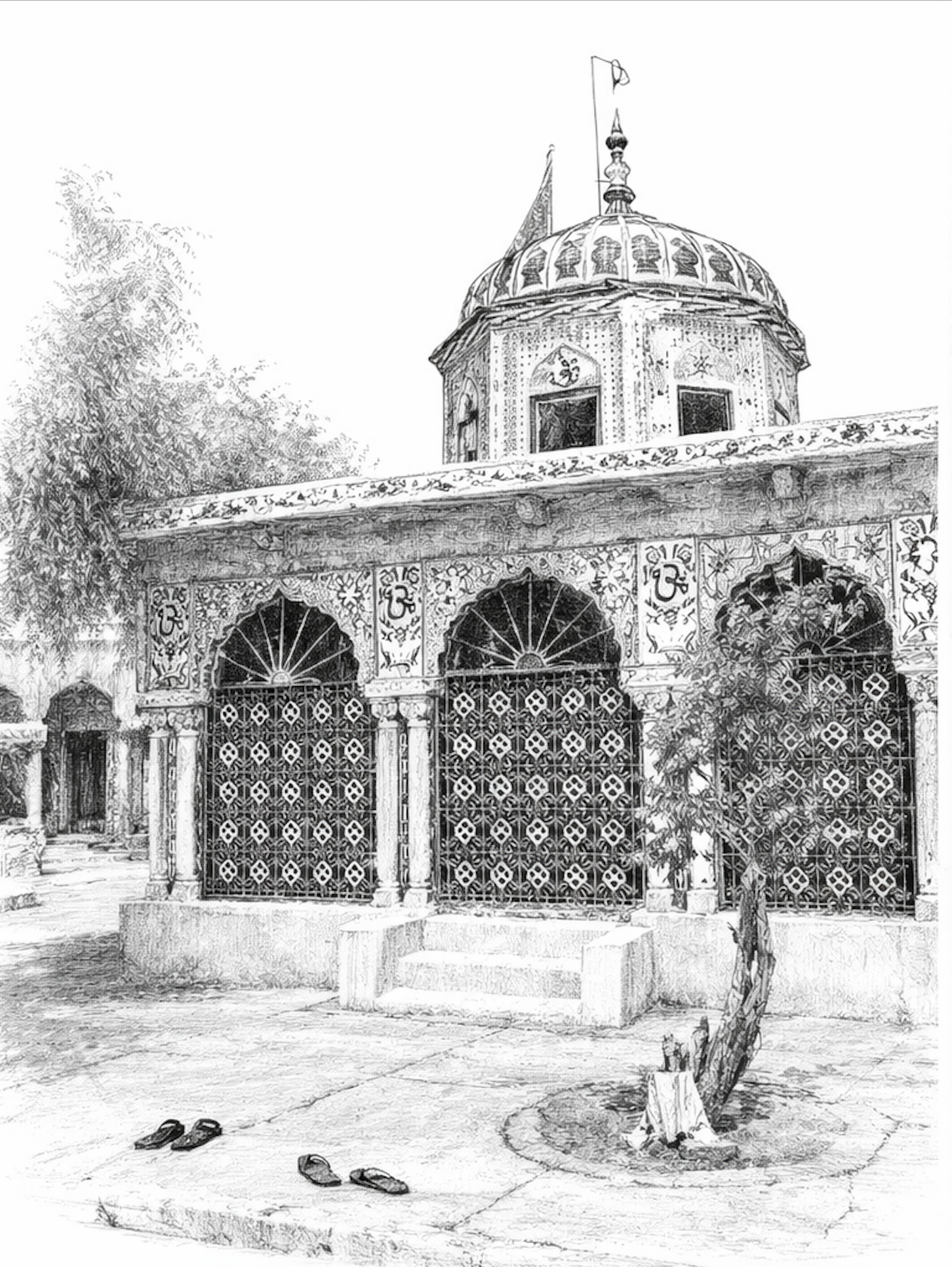
An oasis in the desert
Sant Nenuram was born in Islamkot in 1898, my ancestral village. Orphaned at a young age, he endured profound loss early in life. Yet rather than succumb to it, he set out across the desert in search of life’s deeper purpose, undertaking a pilgrimage through India. When he returned, he brought with him not wealth or status, but pearls of wisdom and a quiet realization: that the deepest joy is found in selfless service, and in offering one’s gifts for the betterment of kin — both human and non-human.
He chose to live as a simple mendicant, gathering ingredients from local villagers so he could cook meals for anyone in need. Caring for the sick, feeding the birds, and establishing a sanctuary for cows were not symbolic acts, but expressions of a life lived in harmony with the greater web of existence. Through his example, he demonstrated that one can live with outward simplicity and yet possess profound inner richness.
Regardless of colour, caste, creed, or outward difference, he welcomed all who passed through the village — and encouraged others to do the same. His teaching was practical and embodied: share the gifts you have been given, and use them for the collective good.
When he passed away in 1973, the oasis he had nurtured remained. It continues to offer refuge to all who come. In a nation shaken by political and religious upheaval after its founding, the Ashram stands as a quiet testament to communal harmony and shared care. And through it all, Marvi’s songs still reverberate across the desert, capturing the hearts of the people.
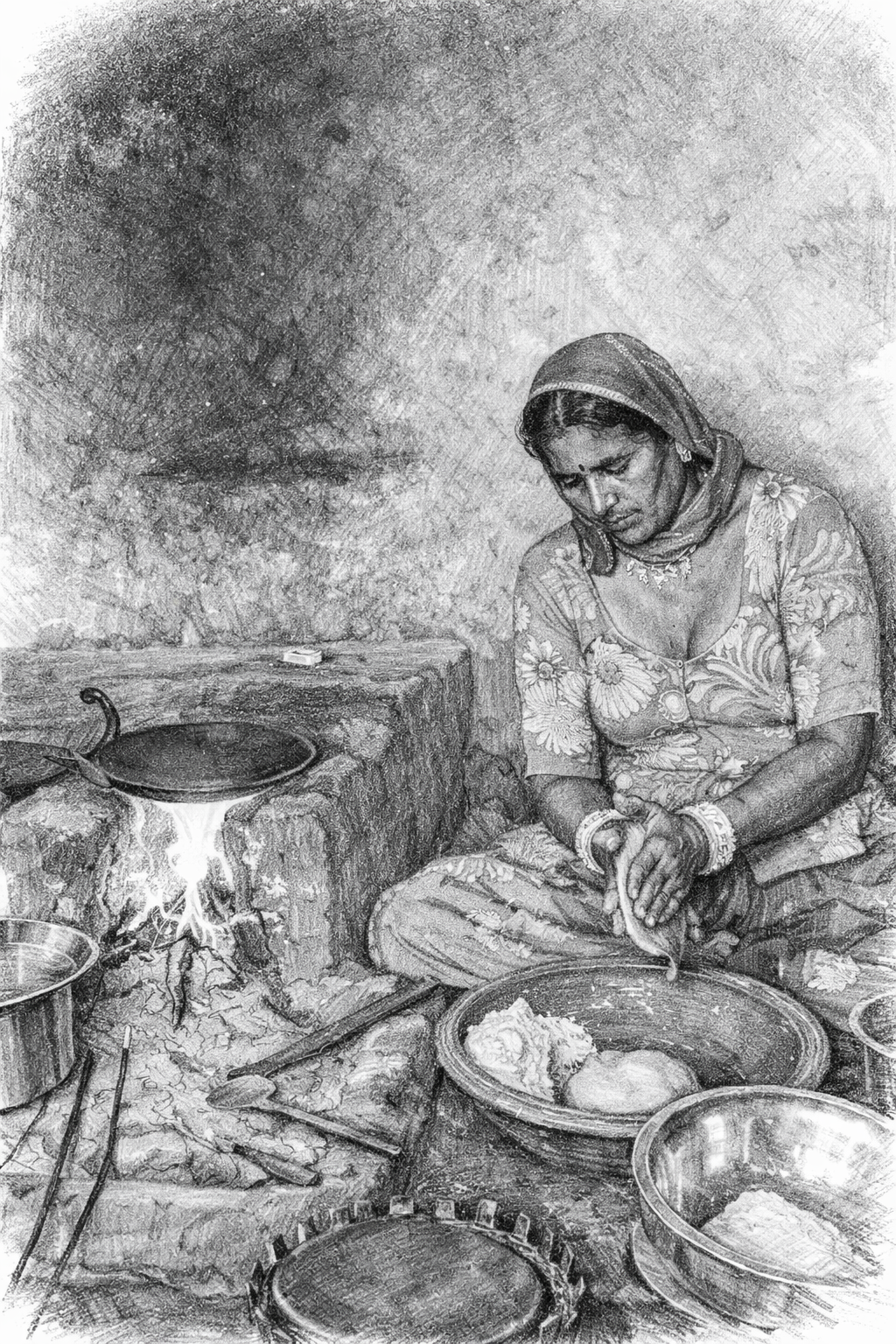
Interdependence as Infrastructure
Our family has lived in the Thar region for millennia. Our spiritual inheritance was deeply matriarchal: songs offered to the river and to Mother Earth, and even our surnames, reflected a connection to the divine feminine — echoing the traditions of the Indus Valley.
Life unfolded through shared resources and interdependence. For weddings, festivals, and celebrations, everything — from utensils to bedding — was gathered from individual homes and brought to a common space, then returned once the gathering ended. Homes were built for multiple generations, and life extended beyond walls: sleeping under the open sky, walking dusty streets where cows and goats wandered instead of cars, and listening to stories passed down as naturally as breath.
Doors were rarely closed, for the town was not a place of strangers but of familiar faces. Men tended shops, while many women ran home-based businesses, often gathering together to support one another in daily tasks. Nearly every aspect of life was communal. Before our Elders departed, they seemed to sense the slow arrival of forces that would reshape the land — colonizing influences that had long bypassed the desert due to its remoteness. The guidance they left was simple: do not turn this place into one of mere convenience. A living culture depends on interconnectedness — on people relying upon one another and upon the greater web of life to thrive. Our relationship to land, to people, to song, and to our non-human kin was the foundation of that vitality.
In our pursuit of speed and convenience, we may have drifted from that orientation. Aangan seeks to restore this balance, drawing upon the timeless teachings and lived examples of our Elders.
Our Home, Sindh 🤍
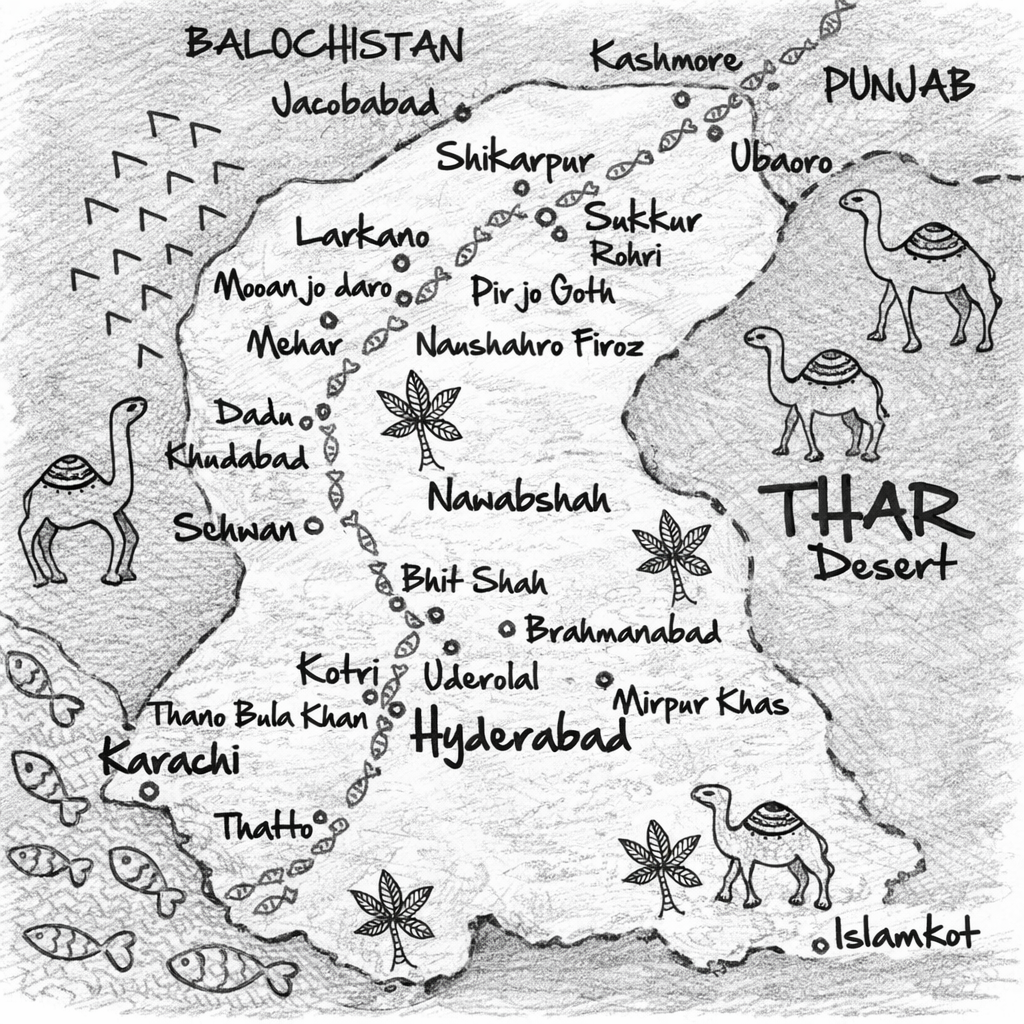
Image credits: Sindhi Saaz Foundation
-
Rig Veda, one of the oldest books in the world describes the great river as follows:
“Let the poet speak now, from this sacred place, of your greatness, O rivers. From three directions you flow forth in many streams, seven and seven, yet among you the Sindhu stands supreme in her glory.
From the mountains to the sea she moves with unstoppable strength, following the path once shaped for her by Varuna. Eager and powerful, she outpaces all other waters in her course. The thunder of her current is heard not only across the earth but seems to echo into the heavens themselves. Light glimmers along her vast and unbroken journey.
She descends from the mountains like a great bull in motion, like rain bursting from clouds amid rolling thunder. And the other rivers flow onward, offering their waters into her.”
-
Annemarie Schimmel, Professor Emerita at Harvard University in her 1986 book, Pearls from the Indus, writes as follows:
“To end my various answers to the question "Why do you learn Sindhi, of all languages?," let me confess that, as a woman, I love the way Shah 'Abdul-Latif describes his heroines: full of love, faithful to their country (like Marvi), ready to sacrifice everything for the sake of their love, courageous enough to face danger and death on the road to the Eternal Beloved. Would not such poetry alone be worth studying and loving?”
-
Annemarie Schimmel’s description of The Risalo of Shah Abdul-Latif Bhittai:
This collection of mystical poetry is the most fascinating and intriguing work for the linguist interested in the development of Sindhi as a literary medium as well as for the historian of religions. Here, the great tradition of Sufism is wrapped in a new, most delicate garment; it appears in a regional language capable of expressing even the most refined mystical experiences and the most inexplicable movements of the soul.
Available here.
-
Sindh has long stood as a meeting point between East and West — not merely geographically, but spiritually and poetically.
In the West, figures such as Mary Oliver and Annemarie Schimmel found inspiration in the verses of Rumi. In Sindh, Rumi was never distant. His works lived alongside local folklore, indigenous epics, and the oral traditions of the desert. Almost every mystic and poet of the region read him, not as something foreign, but as part of a shared spiritual inheritance.
Sindh’s poets were not isolated within their own borders. They were in quiet dialogue with Bengal, with Punjab, with Persia. Rabindranath Tagore himself sings of Sindh in Jana Gana Mana, acknowledging its place in the subcontinent’s collective imagination.
Across the land stand living reminders of this synthesis: Udero Lal, the shrine of Lal Qalandar, Bhit Shah, Hinglaj, and Sant Nenuram’s Ashram. These are not merely religious sites, but spaces where multiple cosmologies meet without erasing one another. They testify to the possibility that distinct traditions — Hindu and Muslim, indigenous and Sufi, local and transregional — can find common ground through hospitality, devotion, and love.
Sindh does not resolve difference by flattening it. It holds it.
This is the land of the lovers.
Learn more about Sindh: